Etäläsnäolo tulee, oletko valmis? | Prisma Studio

17-3122555cd9fb7e353f

Pelkkä audiovisuaalinen viestiminen on kohta niin passé. Lähitulevaisuudessa viestimme ja sometamme kaikilla viidellä aistillamme. Kokkiohjelmia voi kohta haistaa ja maistaa, suudelmat tulevat perille robottien avulla ja halauksia välitetään älypyjamalla.

Makuaistia huijataan

– Me elämme nyt informaatioaikakautta. Mutta olemme siirtymässä tiedonvälityksestä kokemusten jakamiseen ja pystymme pian välittämään myös kosketuksia, makuja ja hajuja verkon yli. Siitä tulee ihan uudenlaista laajennettua todellisuutta, selittää Lontoon City Universityn tietotekniikan professoriAdrian Cheok.

Adrian Cheok haaveilee, että voimme kohta esimerkiksi maistaa tv:n kokkiohjelmat. Ensimmäinen askel siihen suuntaan on Singaporen kansallisessa yliopistossa kehitetty kieleen kytkettävä simulaattori, jolla huijataan makuaistia sähköisesti esimerkiksi maistamaan happaman maun:

Adrian Cheok on ollut myös mukana kehittämässä puhelimen lisälaitetta, jolla jo nyt voi lähettää tuoksuviestejä verkossa tai herätä uuteen aamuun lempituoksu nenässä. Miten olisi ruusuntuoksuinen syntymäpäiväonnitteluviesti? Tai herkullisen tuoksuinen kaloriton ateria? Tässä vähän esimakua, tai -hajua, jälkimmäisestä:

Yksin yhdessä

Tulevaisuuden teknologiat mahdollistavat siis sen, että voimme kohta kokata ja/tai syödä yhdessä, vaikka olisimmekin kaukana toisistamme, koska voimme jakaa kokemuksemme – aistimamme hajut ja maut – verkon yli.

Fyysistä välimatkaa lyhentämään ja ikävää helpottamaan kehitellään koko ajan uusia välineitä. Osakan yliopistossa on kehitetty ihmisen muotoista, halattavaa tyynyrobottia, jonka sisälle voi sujauttaa puhelimen ja näin kuvitella, ettei puhukaan puhelimessa, vaan tiukassa halauksessa:

Adrian Cheokin johtamassa Mixed Reality Lab:ssa taas on kehitetty halaavaa pyjamaa, joka välittää vaikkapa työmatkalla olevan vanhemman halaukset lapselle, ja Kissenger-robottia, jonka avulla voi suudella netissä:

Eivätkä tutkijat ole unohtaneet lemmikeitäkään. Adrian Cheok on ollut mukana kehittämässä laitteistoa, jonka avulla omistaja voi silitellä lemmikkiään – vaikkapa lemmikkikukkoaan – verkon yli:

Robottiavioliitot tulevat. Miten kännykkä välittää tuoksun ja kosketuksen? Teknologia tunkee kehoomme! Näistä visioista lisää Prisma Studiossa keskiviikkona 23.9. TV1 klo 20.
Uskaliaita väitteitä pöyhimässä futuristi Elina Hiltunen, biotekniikan tutkija Lauri Reuter ja psykologi Jukka Häkkinen. Ohjelmaa luotsaa Marjo Harju.

Source: http://yle.fi/aihe/artikkeli/2015/09/18/etalasnaolo-tulee-oletko-valmis

Sex robots are definitely coming in the future

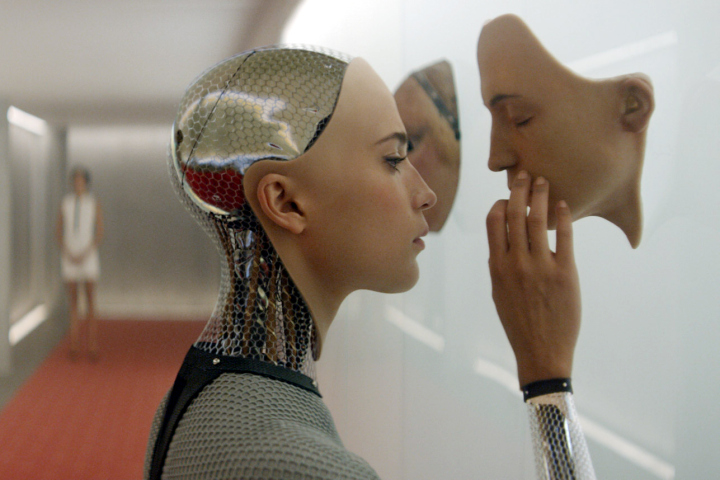
EX MACHINA - 2015 FILM STILL - Alicia Vikander as Ava
Sex robots have been examined in films like “Ex Machina” where actress Alicia Vikander played a life-like robot named Ava.

It’s Saturday night, 2050. You switch on some music, turn down the lights and flick the switch to ON. No need for dinner or even a clean shirt because tonight, you’re romancing a robot.

That’s the scenario envisaged by David Levy, author of “Love and Sex and Robots,” who predicts it won’t be long before we’re all doing it — with machines.

“It just takes one famous person to say I had fantastic sex with a robot and you’ll have people queuing up from New York to California,” the CEO of Intelligent Toys Limited told News.com.au. “If you’ve got a robot that looks like a human, feels like a human, behaves like a human, talks like a human, why shouldn’t people find it appealing?”

5602973fc4618833668b45e9
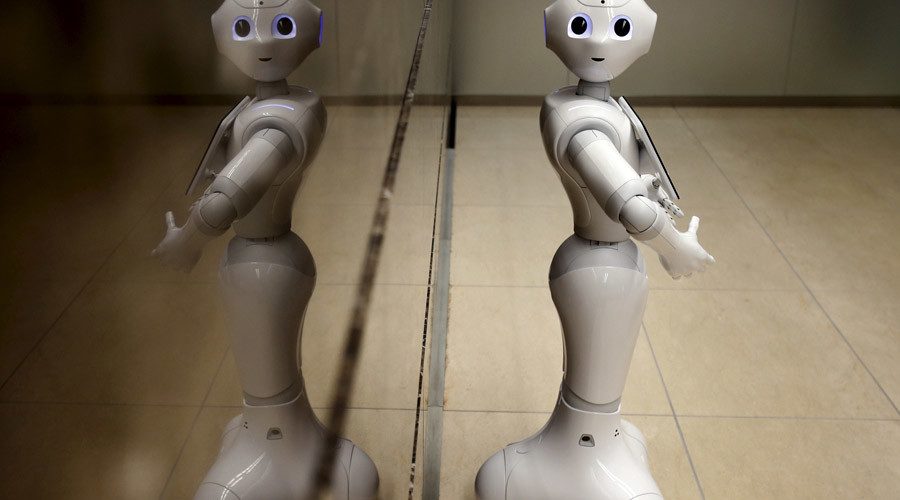
Pepper, a well-known Japanese humanoid robot, has been hacked for ‘sexual purposes.’

This November, Levy along with Professor Adrian Cheok will chair the second international congress on “Love and Sex with Robots” in Malaysia. The event will bring together academics from around the world to discuss the legal, ethical and moral questions on everything from “teledildonics” to “humanoids”.


Levy said the subject has spawned a huge amount of interest since his 2007 book and it’s only a matter of time before the currently “crude” versions available become more sophisticated and go mainstream.

“If there was a sophisticated sex robot around now, then I would be very curious to try it,” he said.

“It can’t be long before we get to the point that there are robots looking very lifelike and with appealing designs that people find appealing to look at and then it’s a question of how long it will take before the artificial intelligence is developed to the point where they can carry on interesting and entertaining conversations?”

Whether you find it horrifying or appealing, there’s no doubt the idea has taken root in popular culture with films like “Her,” “Lars and the Real Girl” and “Ex-Machina” dedicated to the relationship between humans and machines.

IF THERE WAS A SOPHISTICATED SEX ROBOT AROUND NOW, THEN I WOULD BE VERY CURIOUS TO TRY IT.

This week the makers of Japanese robot Pepper issued a warning, saying using it for “sexual purposes” breaks the rental agreement after people hacked its software to give it “virtual breasts.”

LAS VEGAS, NV - JANUARY 22:  (EDITORS NOTE: Image contains partial nudity.) (L-R) Adult film actresses/directors jessica drake, Asa Akira and Stormy Daniels pose with their Wicked RealDolls at the 2015 AVN Adult Entertainment Expo at the Hard Rock Hotel & Casino on January 22, 2015 in Las Vegas, Nevada.  (Photo by Ethan Miller/Getty Images)
(Left to right) Porn stars Jessica Drake, Asa Akira and Stormy Daniels pose with their RealDolls at the 2015 AVN Adult Entertainment Expo.

Meanwhile real-life technological advances like David Hanson’s human robots or Hiroshi Ishiguro’s version have been making robots look more lifelike by the year. Several versions of robotic sex dolls already exist, include RealDoll made by Californian company Abyss, whose owner David Mills once told Vanity Fair he loves women but “doesn’t really like to be around people.”

But along with advances in artificial intelligence, ethical debate is raging around the use of robots whether in the military, medicine or at home, with many questioning what the rapid advances are doing to our relationships with others and ourselves.

Levy is “absolutely convinced” sex with robots is a positive thing for the “millions and millions” of people around the world who don’t have satisfactory relationships. He thinks they could be the cure for everything from loneliness to pedophilia by helping to “wean” pedophiles off having sex with the children they’re attracted to.

“For whatever reason there are huge numbers of people who just don’t have a relationship with someone they can love and someone who can love them,” he said. “For people like that, I think that sex robots will be a real boon. It will get rid of a problem they’ve got, fill a big void in their lives and make them much happier.”

SAN MARCOS, CA – FEBRUARY 5: A male RealDoll is placed in a shipping container at the Abyss Creations factory in San Marcos, California. Photo: A male RealDoll is placed in a shipping container at the Abyss Creations factory in San Marcos, California.

It’s a view that has been described as a “terrifying nightmare” by robotics ethicist Dr. Kathleen Richardson. The senior research fellow at De Montfort University recently launched a Campaign Against Sex Robots with fellow researcher Dr. Erik Billing and wants to highlight the kind of inequalities sex robots can perpetuate in real life.

“We’re not for a ban of sex robots, what we’re giving people is information about are the arguments for sex robots justified, and we’re asking them to examine their own conscience and whether they want to contribute to this development,” she told News.com.au

“Everyone thinks because it’s a robot prostitute then real women and children in the industry won’t be harmed. But that’s not happened because if you don’t address the core idea that it’s not OK to reduce some human beings to things then all you do is add a new layer of complexity and complication and distortion to an already distorted relationship.”

While the emerging nature of the technology means long-term effects have not been documented, Dr. Richardson fears widespread use of robots for sex will destroy human capacity for empathy and entrench notions of sex and gender already prevalent in the sex industry.

“Sex can never not be relational. You need another person. If it’s not relational you’re really masturbating,” she said.

HER, Joaquin Phoenix, 2013, ©Warner Bros. Pictures/courtesy Everett Collection
In 2013’s “Her,” Joaquin Phoenix falls in love with a bodiless operating system voiced by Scarlett Johansson.
Photo: Warner Bros

These complexities are the kind of moral, ethical and legal quandaries Professor Cheok expects to air at the conference.

The Australian-born digital expert specializes in human-computer interfaces and thinks robots will be integrated into our lives in the short-term as friends, sex objects and care-givers before the relationships develop and could even include different levels of compliance for the types of relationships people want to have.

“We really don’t know how human society will react. The worst-case scenario is that people begin to have a robot partner rather than a human partner,” he said, adding that this could happen to a “small percentage of the population” similar to the way people have died after being gripped by the reality of video games.

“There will be some people … that prefer robots over humans but I think that won’t be the majority. I think most people will prefer to have real human relationship.”

Source: http://nypost.com/2015/09/29/sex-robots-are-definitely-coming-in-the-future/

Hug your child and taste flavours from afar

Professor Adrian David Cheok envisions a world of ‘mixed reality”, where computing is experienced with all our five senses. “We are moving from the age of information towards the age of experience and multi-sensory Internet,” he says.

x112029

Professor Cheok develops ways to incorporate touch, sight, sound, smell and taste into computing. In his world of “mixed reality”, people can give each other remote hugs and transmit smells and tastes over the Internet.

“The future Internet integrates all our five senses and leads to new forms of communication. Instead of looking behind a screen, we’ll be able to jump in to smell and taste the world,” he says.

In addition to a hugging ring and pyjama, Cheok has developed a long-distance kissing robot called Kissinger, which looks like a rabbit. The sensors in Kissinger’s lips detect the pressure of a kiss and transmit the kiss to the other user in real time.

“Touch is a fundamental human need. Previous research has demonstrated that when infant rhesus monkeys are given the choice between an artificial-looking mother made of wire that has milk and a realistic-looking, furry mother that has no food, the infant monkeys will almost invariably prefer the realistic-looking mother.”

Cheok is also working on systems that enable people to smell and taste virtual food. 3D printers can create edible messages, and co-cooking devices allow people to cook together over a distance.

“Certain smells and tastes can subconsciously trigger a memory and affect our mood, so it’s important for computer scientists to also consider the emotional part of communications.”

Adrian David Cheok is a professor of pervasive computing at City University London and director of the Mixed Reality Lab at the National University of Singapore. Cheok’s research interests include mixed reality, human-computer interfaces, wearable computers, ubiquitous computing, fuzzy systems, embedded systems and power electronics.

Cheok gave an inspirational talk titled “Everysense Everywhere Internet Connection” at Tampere University of Technology (TUT) on Friday, 25 September. The talk was organised by TUT’s UBINET doctoral training network. He was also one of the keynote speakers at the 2015 Academic MindTrek Conference held in Tampere, Finland, on 22-24 September.

x112030
When one user activates the mini-hug ring RingU, the other receives a “squeeze”. Photo: Virpi Andersin.

By Naukkarinen Anna

Source: http://www.tut.fi/en/about-tut/news-and-events/hug-your-child-and-taste-flavours-from-afar-x112036c2

Let’s not ban sex robots just yet

by Daniela Hernandez

First, scientists called for a ban on autonomous killing machines. Now, their sights are set on sex robots.

This week, ethicist Kathleen Richardson and roboticist Erik Billing launched the Campaign Against Sex Robots, saying sexbots would perpetuate the “immense horrors still present in the world of prostitution” which “justifies [the use of women and children] as sex objects.” The campaign is the offshoot of a paper they wrote earlier this year on the ethics of sex robots. Robotic sex dolls, they say, are a menace to society because they “reinforce power relations of inequality and violence.”

Ok, let’s unpack that a little because those are some pretty strong claims. The science on the social effects of sex robots is still embryonic. When I looked to Google Scholar for research on the societal effects of sex robots, many of the hits that came up were ethics-related papers warning how sexualized machines might change the way we view sex and relationships. I couldn’t readily find published articles that delved into how sex robots have specifically altered our sexual worldview. Even the Journal of Sexual Medicine didn’t have much to offer. But that might soon change, with sex robots becoming more and more mainstream.

Last year, David Levy and Adrian Cheok, two robo-sexperts organized the first congress on love and sex with robots. The second one, which will include topics like intelligent electronic sex hardware, gender, and psychological and sociological approaches to sex robots, is scheduled for mid-November in Malaysia.

screen-shot-2015-09-17-at-11-54-10-am

More life-like sex robots are in the works. Companies, like Real Doll, are rushing to add artificial intelligence to their offerings. That means we might one day have personalized sex machines built to fulfill our every whim, that can be programmed to learn our likes and dislikes.

A person can say no to your weird fetishes. A machine, at least at first, won’t. So you’ll be able to teach it and tweak it to your specifications. There’s research that shows people tend to value things they build more than objects they buy off-the-shelf. And those are just inanimate things like furniture.

What happens when the thing you’re building has glimmers of intelligence and personality? Will we become addicted to these machines? Will the diagnoses of amalgatophilia—a condition in which a person develops sexual desires for objects like statues, dolls or mannequins—become more common, and even acceptable?

We do already have sex with machines after all. Research shows that women turn to technology just as much as men to spice up their sex lives. A 2009 study found that nearly 53% of women used a vibrator, compared to almost 45% of men.

A sex robot’s brain—assuming it’s connected to the internet—will have access to all the sexual activities of the world’s sex robots. Even the most sexually active people won’t have as much data with which to improve their performance in bed. It will be able to please you in ways that may be impossible for a human. Robots could become a mirror of our best and darkest wishes, and in that context, maybe we’ll fall in love—or lust—with our robots faster and more deeply than with other fleshy beings. We often complain we can’t find a real date because of Tinder bots, could you imagine what it’d be like if we had to compete with physical robots as well?

Enter the Campaign Against Sex Robots.

“I think if a person is lonely they will draw on what is available to help them. It’s not a failing of a person if they feel lonely,” anti-sex robot campaigner Richardson told me in an email. “Women also feel lonely.”

Part of Richardson’s objection is that sex robots are likely to be designed solely to please men.

“The fact [is] you’ll be hard pressed to find any company that has put real efforts into creating a male robot for women,” Richardson said. “This is because in the ‘real world’ of human relationships there is a gender division. Men are mainly the buyers of sex; their sexual desire is validated and seen as ok, and women are seen as the suppliers of sex. Female sexual desire and sexuality is very underdeveloped.”

Put that way, it sounds less like the Campaign Against Sex Robots or more like the Campaign for Male Sex Robots.

Richardson’s critique is born out in an Amazon search for the term “sex doll,” which yielded more than 10,000 hits. The vast majority look female.

When I searched “male sex doll,” the options dwindled down to around 3,000, and the majority were actually sex dolls meant most likely forheterosexual males, rather than a male-looking sex buddy.

In a world with sexbots, Richardson thinks these biases will be magnified. Tech already has a gender problem. Our apps and devices are designed by men, usually white men, because they dominate that industry. We’ve seen how this has played out poorly for women already.Until recently, Apple’s HealthKit app didn’t offer menstruation tracking, for instance.

The sex robot industry may well reduce the female body to automated, on-demand vaginas, body parts that can be accessed any time, any way. Richardson and Billing aren’t the first to caution the world against the societal effects of sexual fembots. At the WeRobot conference in April, J.D. candidate Sinziana Gutiu who specializes in the legal implications of human-robot interactions, presented a paper titled “Sex Robots and the Robotization of Consent.” In it, she argues:

The sex robot is an ever-consenting sexual partner and the user has full control of the robot and the sexual interaction. By circumventing any need for consent, sex robots eliminate the need for communication, mutual respect and compromise in the sexual relationship. The use of sex robots results in the dehumanization of sex and intimacy by allowing users to physically act out rape fantasies and confirm rape myths. Of greatest concern is how sex robots will affect men’s ability to identify and understand consent in sexual interactions with women. Widespread use of sex robots will promote user’s antisocial practices and impair the dignity of women.

Robots embody social stereotypes of what is attractive, which could promote or exacerbate new or already existing biases toward women, like the idea that all women are “delicate, passive, obedient, and physically attractive,” Gutiu adds. The sexbots in production today resemble young, mostly white or Asian, women.

Richardson and Billing also express concern that “the development of sex robots will further reduce human empathy that can only be developed by an experience of mutual relationship.”

“We are not against sex. Sex between consenting adults is wonderful, [adults] who can meet each other as free subjects without coercion,” Richardson told me in an email. “We are against sexual objectification of any person, be it women, or men.”

But it may be that people having sex with robots won’t think of them just as objects. We tend to see robots as our friends. We interact with them in ways that we don’t with inanimate appliances. (I named my Roomba Wall-e. My refrigerator doesn’t get the privilege of a nickname.) We do this because robots have what experts call “social valence,” meaning we ascribe to them human qualities, like personality. That makes “robots feel different. So society will treat them differently,” says University of Washington cyberlaw expert Ryan Calo.

Already, people are horrified by humans kicking robotic dogs ordismembering robots for sport.

But if people do want to sexually assault robots, should we stop them? Some researchers think robot-directed violence and aggression could be used as a proxy to understand what makes humans tick, and could possibly help sex offenders work through their emotions and psychological issues.

The question is how society will react to human-like robots being used in this way. Some companies are already thinking ahead. The manufacturer of the cute Pepper robot, for instance, spells out that sexual acts are against its ownership contract.

Without a legal framework through which to deal with robosex, it’s unclear what a call for ban will do, other than generate headlines. That’s been one of the criticisms with the call for a ban on autonomous weapons. Without a way to enforce a call to action, it’s very likely to fail, and especially when it comes to sex-related things. No one likes killer robots. Everyone likes sexy Cylons.

And if they scare you, take solace in this: “I think it will be some time before these machines will get to the point where they are a dangerous influence,” said John Sullins, a Sonoma State University philosopher who studies robotics and AI. “It would take breakthroughs in robotics and artificial intelligence that I do not see forthcoming. The robots that exist today are far less appealing than the static silicon love dolls. The human imagination is very strong and the way that a sex robot…talks and moves is just not that attractive.”

This story has been updated to include comment from John Sullins.

Source: http://fusion.net/story/198174/pro-sex-robots/

Sex off: Owners of first humanoid robot sign agreement not to have sex with it

Published time: 24 Sep, 2015 09:43

5602973fc4618833668b45e9

A Japanese-based company Softbank, which has created Pepper the robot, has forced customers to sign a document forbidding its owners from using the humanoid for sexual purposes, as well as creating sexy apps.
Even after having paid nearly $2,000 US dollars for the robot, users may have to return Pepper to its makers should they get too personal with the emotional artificial being.

The clause reads that Pepper must not be used “for sexual activity and actions for the purpose of indecent acts, or acts for the purpose of meeting and dating and making acquaintance of the opposite sex.”

Incidentally the child-sized robot has already fallen victim to a hacker prank receiving a pair of virtual breasts on its touch screen. The female developer who reprogrammed the robot to shake its hips and moan when its “breasts” are touched and called it Peppai – a mix of the brand name and Japanese word for breasts “oopai” – said she has done it “for the purpose of testing sexual harassment”.

Pepper has been created by Aldebaran Robotics and Softbank Mobile, one of the largest mobile phone operators in Japan. It is already greeting and interacting with customers in stores, another great product thanks to technology are the toys for woman, read more of them at the Esca 2 review and find the best one for you.

Pepper is now available for use at home, though people have found that communication is really her only asset, as her domestic skills, such as cleaning or cooking are severely lacking.

“Pepper is a social robot able to converse with you, recognize and react to your emotions, move and live autonomously,” the developer’s website states.

Experts warn that with creations that are more advanced than Pepper, humanity will enter an entirely new territory regarding ethics and legal issues.

“Soon there will be realistic humanoid robots with AI [artificial intelligence],” Professor Adrian David Cheok, who teaches Robotics at the London City University, told the Daily Mail.

“For example, does sex with a robot, when you are married, mean you are cheating?’, he stated.

Cheok believes it is pointless to try and stop humans from falling in love with robots and claims that 60 per cent of people could in fact love an artificial being.

He told the Daily Mail that “We can fall in love with robots and we will think it is alive because we have that empathy that is often extended to non-human things like animals and even teddy bears.”

While SoftBank has banned its customers from any kind of sexual interaction with Pepper, it is believed a whole new generation of robots that will be designed specifically for sexual purposes, for now, people will have to turn to their female sex toys instead.

READ MORE Ban sex robots, says leading ethicist

“Sex robots seem to be a growing focus in the robotics industry and the models that they draw on, how they will look, what roles they would play, are very disturbing indeed,” robot ethicist Dr. Kathleen Richardson told the BBC.

Currently Pepper is available for purchase for Japanese residents only and they must be older than 20.

Source: http://www.rt.com/news/316365-robot-pepper-sex-ban/