
Poetry Mix-Up installed at the Kent Ridge MRT Station

Under the Art in Transit program at Kent Ridge MRT Station (newly opened station on the circle line in Singapore), a new media art piece entitled Poetry Mix-Up is commissioned. The Poetry Mix-up system is developed by Mixed Reality Lab of National University of Singapore. The system allows local travelers to send an SMS to generate a poem based on the submission. The final output generated is shown in a digital display on the lift shaft at the platform level as shown in the images.

Click here to view all the photo

Third International AR Standards Meeting June 15-16, 2011

The meeting was recently concluded in Taichung, Taiwan. The objectives of this meeting were:

To establish or increase mutual awareness among Standards Development Organizations (SDOs) relevant to AR through a carefully managed “discovery” process that is mindful of the IPR policies of the respective SDOs, to establish or increase dialog among leadership of industry associations whose members are specifically interested in Augmented Reality initiatives and SDOs, to explore how SDOs and industry associations will define “contact zones” of mutual interest, to permit participants of the meeting to share their views and objectives, as well as progress/status of their activities, and to introduce new and important topics likely to impact the future of AR such as Spatial Law and Policy.

Program Committee members for this meeting were:

Neil Trevett, NVIDIA
Martin Lechner, Wikitude
Carl Reed, OGC
Douglas Knisely, Qualcomm
Gerard Kim, University of Korea
Adrian David Cheok, National University of Singapore CUTE Center
Ed Parsons, Google
Lars Erik Bolstad, Opera

A summary of the meeting can be found at:
http://www.perey.com/ARStandards/[Perey]Summary_of_3rd_AR_Standards_Meeting.pdf

Best Paper Award for 2nd International Conference on Education, Training and Informatics (ICETI 2011)

The paper titled “A Multimodal Virtual Anatomy Learning Tool for Medical Education”, has been selected as the best paper from the session of ‘Learning Technologies / Strategies for Assessing Student Learning and Teaching,’ at the 2nd International Conference on Education, Training and Informatics (ICETI 2011), held in Orlando, Florida, USA, on March 27th – 30th, 2011. This project is jointly developed by Keio-NUS CUTE Center (NUS) and Yong Loo Lin School of Medicine (NUS) which is particularly useful medical students to identify key anatomy structures and their complex spatial relationships.

The members of the A Multimodal Virtual Anatomy Learning Tool for Medical Education team are:

Ponnampalam Gopalakrishnakone
Lu Jianfeng
Goh Poh Sun
Asanka Abeykoon
Owen Noel Newton Fernando
Adrian David Cheok

Lovotics User Study

Click here to see all photos

In order to evaluate the performance of Lovotics robot a  novel method for measuring human – robot is proposed by Lovotics team in CUTE Center. A user study is conducted to evaluate the emotional effect of interaction with the robot.  20 users experienced  interaction with Lovotics robot and answered questionnaires which were designed based on psychology of love especially to measure love scales between the participants and the robot.

MXR Lab produces kids augmented reality for Okto Channel with Oak Three Films and Real Space

Witz Alive is a preschool show for children from 3 – 6 years old based on three characters, the tiger (TAMMY), the monkey (ITCHEE), and the bird (WINGZ). Augmented reality application, WITZ Alive AR, is jointly developed by CUTE Center, NUS and Real Space pvt. LTD to provide an added interactive experience for children. We believe that this will enhance their experience outside the television box, where they can immerse themselves in the exciting AR technology by seeing their favorite WITZ characters come to life.

URLs:

Impact:

  • Giving out 1,000 markers to pre-school teachers who will in turn hand it out to students during their classes
  • OKTO will be producing trailers that will run on OKTO to promote the WITZ Augmented Reality (will update on airtime and dates)
  • Mom & Baby Event: held the demo on OKTO booth, where children experienced the demo from 18th – 20th March, Expo, from 11am – 8pm (below are some photos from the event)
  • Broadcast on the WITZ Alive AR through singaporemotherhood.com which has around 50,000 subscribers. This will showcase Augmented Reality as the key information for them to try out with their children.

Demo:


Adrian David Cheok – Talk at Khazanah Megatrends Forum 2010

Reclaiming the Commons: Collaborating and Competing in The New Economic Order

Dr Adrian D. Cheok – Director, Mixed Reality Lab, National University of Singapore

SESSION 2: FIRMS & TRANSFORMATION

SPECIAL ADDRESS: Synthetic Reality: The Science and Applications of Virtual, Mixed, and Augmented Reality Adrian David Cheok is Director of the Mixed Reality Lab and Associate Professor in the Department of Electrical and Computer Engineering, National University of Singapore. He was appointed to be a Full Professor of Graduate School of Media Design, Keio University, from April 2008.

He received several outstanding awards: A-STAR Young Scientist of the Year Award 2003, the SCS Singapore Young Professional of the Year Award 2004, Fellow in Education, World Technology Network in 2004, and Microsoft Research Award for Gaming and Graphics in 2005. He was also awarded the Young Global Leader 2008 by World Economic Forum.

Read more about the Khazanah Megatrends Forum

Watch the Khazanah Megatrends video here

ECE PhD scholar Wang Xuan win’s international award !

Wang Xuan, a 2nd Year Ph.D. student in our lab, has recently been selected as the winner for Communication Technologies and Interface Track, Young Researchers and Ph.D. Workshop for Research on Innovative Solutions for Elderly (YR-RISE). She was also placed the third for best oral and poster presentation at the workshop. The workshop was held as part of the 2nd Ambient Assisting Living (AAL) Forum in Odense, Denmark from Sep 15th to 18th, 2010. The AAL is a new joint research and development funding supported by the European Community. The research project she presented is entitled “Confucius Chat: Mediating Cultural Communication between Elderly and Children using New Media”.

Link: http://www.ece.nus.edu.sg/students/stu_achievements1.html

ECE PhD scholar Wang Xuan win's international award !

A/Prof Adrian Cheok talk on U@live

Adrian Cheok talked at U@LIVE at NUS on:

Digital Humanity

We have entered a new era of humanity. For the first time we haveconstant 24/7 real time global communication. How has this changedhumanity and the internet generation? How will learning change. Whatare the mega trends we will see from this digital exponential revolution.


Watch here

ACE Creative Showcase Golden Award

Liquid Interfaces won the Creative Showcase Golden Award at ACE2010 in
Taiwan.  The competition was part of the Advances in Computer
Entertainment conference which brings together researchers and
practitioners from industry and academia to present and discuss their
work in breakthrough areas in computer entertainment.
From more than 15 projects Liquid Interfaces was chosen as the first price by the
attendees public poll.  The second position was shared by two projects
“VirtualPhilharmony: a conducting system focused on a sensation of
conducting a real orchestra” and “A Software System for Creating and
Developing Mobile Augmented Reality Applications”

 The members of the Liquid Interfaces team are:

 Jeffrey Tzu Kwan Valino Koh,
Kasun Karunanayaka,
Jose R. Sepulveda,
Mili John Tharakan,
Jeremy Heng,
Liu Yi Jiang,
Eishem Bilal Naik,
Adrian David Cheok
  

David Freeman Workshop

On Thursday the 2nd of December David Freeman visited CUTE center to give his workshop titled “Giving Engaging and Memorable Presentations”.    David Freeman is a Los Angeles based story writer which teaches the “Beyond Structure”  story writing workshop world wide. His workshop is taken by novelists, screenwriters, directors, producers, stars, and key creative an marketing executives for the major Hollywood  companies.  All the students in the lab attended the one day workshop.  In his workshop Mr Freeman provided the audience with a series of drills to engage audiences.

Liquid Interfaces

Liquid Interfaces won the Creative Showcase Golden Award at ACE2010 in Taiwan.  The competition was part of the Advances in Computer Entertainment conference which brings together researchers and practitioners from industry and academia to present and discuss their work in breakthrough areas in computer entertainment. From more than 15 projects Liquid Interfaces was chosen as the first price by the attendees public poll.  The second position was shared by two projects “VirtualPhilharmony: a conducting system focused on a sensation of conducting a real orchestra” and “A Software System for Creating and Developing Mobile Augmented Reality Applications”  The conference attracted a multi-disciplinary group including experts in the arts, sociology, anthropology, psychology, marketing, computer science and design.  Liquid Interfaces Gold Award

AmbiKraf presented at the Ars Electronica 2010 “repair” festival

The Keio-NUS CUTE Center had the honor of presenting the project “AmbiKraf – Breathing life into textiles” at this year’s Ars Electronica 2010 festival from 2nd to the 11th of September 2010. The theme of this year’s festival was “repair” which focused on innovative solutions towards many of societal issues. This year the festival was dispersed over few key locations in the city with bulk of the installations being at the Tabakfabrik of Linz. Tabakfabrik is an old tobacco factory that was set up in 1850 for the manufacture of cigars and pipes. After its constant growth throughout the years that expanded its workforce to approximately 1000 people, the factory ceased its operations in 2009. The city of Linz recently acquired the Tabakfabrik again is currently being assessed for its future options of use.

We presented “AmbiKraf – Breathing life into textiles” as an installation in the ‘Future Factory’ category. Here we presented an interactive byobu screen. In this installation we had a custom made byobu screen that animated flowers appearing and disappearing in a very subtle manner. With AmbiKraf we showcased how the future technology can ‘repair’ the traditional arts and crafts of textiles by merging those age old traditions with the future technology. The installation was well received for its efforts of bringing back these old traditions in a suitable manner for the contemporary society. In addition, Mili Tharakan, a Research Fellow of the CUTE Center in Singapore delivered a talk based on the theme of AmbiKraf at the “Future Factory Talks” session.

This year’s festival also featured some of the other key works such as “Oribotics” by Matthew Gardiner, the “HONDA ASIMO”, “Telenoid” by Hiroshi Ishiguro – a key figure in the android robotics field, etc.

Website : http://new.aec.at/repair/en/program/future-factory/#post-1708

AmbiKraf receives an honorary mention at the Nokia UbiMedia MindTrek Awards

AmbiKraf received an honorary mentioning at the recently concluded Nokia UbiMedia MindTrek Awards 2010, in Tampere Finland. This competition was held as a part of the MindTrek Conference which is a leading Nordic digital media and business conference, focusing on social media & Web 2.0. The Nokia UbiMedia MindTrek Competition is a competition sponsored by Nokia in search of projects, products or services that seek to broaden our understanding of how ubiquitous media will influence out future.

MindTrek certificate

Nokia UbiMedia MindTrek Certificate

Attracting over 20 entrants from around the world, the jury selected three projects as the finalists with ‘AmbiKraf’ from the Keio-NUS CUTE Center in Singapore and ‘iBall’ from Hasselt University/EDM in Benlgium receiving honorary mentions. The winner of the competition was ‘myGreenspace’ by the eHealth Group RWTH Aachen, Kai Kasugai und Felix Heidrich. The press release on the honorary mention stated “The jurywould like to express their recognition for two distinct projects which did not make the top three, but definitely deserve an honorable mention. The motion-sensitive “iBall”, invented by Hasselt University / EDM in Belgium, enhances traditional ball games with mobile gaming features. The AmbiKraf project from Keio-NUS CUTE Center, National University of Singapore, has invented a technology to render smooth animations on textiles using thermo chromic ink. Both projects extend ubiquitous media into new areas of application in convincing ways.”

Press release: http://www.mindtrek.org/2010/conference/nokia-ubimedia-mindtrek-awards-2010-best-ubimedia-has-been-found

TEDx Zurich 2010

In the spirit of ideas worth spreading, TED has created a program called TEDx. TEDx is a program of local, self-organized events that bring people together to share a TED-like experience. PhD student Jeffrey Koh was invited to speak at TEDx Zurich, to present his team’s findings regarding the Liquid Interface project. His report can be found here.

Report : Bar Camp Seoul

Report : Bar Camp Seoul

http://barcamp.org/BarCampSeoul4

Participant : Yongsoon Choi,

Venue: DAUM building, Hannam-dong, Seoul, Korea
Date: Saturday, November 7 2009

Seoul Bar Camp had 2 sessions and many discussion issues. In fact, I could not count on how many discussions were going on at that time because Seoul Bar camp was very flexible un-conference and I could see many enthused volunteers were presenting their researches and ideas freely during the sessions without presentation allocations. This event was started from almost 10 AM and finished 5PM.

  
Daum Building outlooking
 

Read More: http://www.mixedrealitylab.org/media/articles/Seoul Bar Camp Report.doc

TEDxCanton

TEDxCanton

TEDxCanton aims to convey “ideas worth spreading” to individuals, businesses and institutions in our community and beyond by putting together a program of heavyweight local and international speakers. TEDxCanton engages people in Guangzhou and elsewhere in better understanding Guangzhou’s modernity and heritage, and reach out towards the wider world through motivational, intellectual and entertaining experiences. The theme of the event is “The Overflow of the Heart”, or “心溢新意·畅享创想” in Chinese. The mixed reality lab PhD scholars Wei Jun, and Wang Xuan attended this session and below are their reports on their experiences,

Wang Xuan

Wei Jun

MXR Lab spin off company MXR Corp debuts at Shanghai World Expo

Shanghai Expo visitors will get a taste of “next-generation learning” through four educational and interactive applications developed by MXR Lab Spin Off Company: MXR Corporation Pte Ltd, a leading proponent of mixed reality technology in Singapore. Through wIzQubes™, wIzCards™, wIzOpedia™ and wIzDirector™, users can manipulate and interact with physical and digital objects in real time, effectively allowing them to merge the real and virtual worlds and experience a whole new way of learning and storytelling. Theshowcase will also offer an exclusive preview of the prototype of wIzLab™, ane ducational PC game currently in development. The game will enable children to perform and create their very own Mixed Reality science experiments, helping them explore and learn about Chemistry, Biology, technology and the world in an independent and immersive fashion.

Punggol North Racial & Religious Harmony Street Parade and Carnival 2010

On July 18th the Mixed Reality Lab participated in the Punggol North Racial & Religious Harmony Street Parade and Carnival 2010.  The MXR booth was visited by the guest of honor Mr Teo Chee Hean, Duputy Prime Minister of Singapore.  The Lab presented Confucius Computer and Huggy Pajama with about 150 people using the systems.  The confucius system uses new media to revive and model these historical philosophies and teachings, presenting them in new contexts, such as online social chat, music and food. This enables people to experience and explore the ancient culture using the literacy of digital interactivity.  Huggy Pajama is a novel wearable system aimed at promoting physical interaction in remote communication between parent and child. This system enables parent and child to hug one another through a novel hugging interface device and a wearable, hug reproducing jacket connected through the Internet. The hugging device is a small, mobile doll with embedded pressure sensing circuit that is able to sense varying levels of human force. This device sends hug signals to a haptic jacket that simulates the feeling of being hugged to the wearer.

Petimo: Social networking robot for children wins the First prize in Milan International Invention

Image

Image

2010-04-22 – SINGAPORE – Children as young as seven years old are now able to experience a safe and fun online social environment with the world’s first interactive virtual and real world social robot,developed by a team led by A/Prof Adrian Cheok from the Mixed Reality Lab. Parents can feel safe and comfortable with their children using social networks because the friend making must be made only in the physical world through the children’s robot. An experience like no other, the robotic toy, named “Petimo”, responds to touch and movement. Its outer finish is an adorable plush toy and its small, round physical shape evokes a warm and tender feeling likened to carrying a baby animal. Petimo has already been selected by an international review panel as one of the best three submissions for the Como for Children (C4C) design competition held at The 8th International Conference on Interaction Design and Children (IDC 2009) during its debut in Europe.

Recently, “Petimo” – social networking robot for children, won the first prize in an international innovation competition in Milan Milan, Italy (Apr 22nd 2010). The prize is InventiON: concorso di idee per inventori, InventiON: competition of ideas for inventorshttp://www.innovationcircus.it/2009/. Petimo won the first prize in the ICT (information and communication technologies) track The competition is sponsored by the Municipality of Milan and the Chamber of Commerce, and is co-organized by a service company (Alintec) together with “Nova-Sole 24 ore”, (Italian financial times). The main sponsor of the competition is 3M.

C4C – Como for Children Design Competion

C4C – Como for Children Design Competion

The Chamber of Commerce of Como, in occasion of the IDC 2009 conference, has promoted a special competition calling for proposals on a “technology-enhanced” pre-school environment: the Como 4 Children (C4C) competition. C4C is an initiative to promote a strong innovation of the approach to education for young children (3-10 years of age). The competition’s goal is to “imagine a pre-school of the (near or remote) future, where the physical space is enhanced with (existing or future) technologies and children can naturally intermix, at individual or social level, ‘traditional’ playing and learning activities with interaction based on modern technologies of all kinds”. The competition has two tracks: Vision of the interactive pre-school of the future and Interaction at pre-school. 35 creative, visionary and compelling proposal were submitted from all over the world, by designers, interaction designers, computer scientists and architects. The conference chairs together with a panel of experts from the Chamber of Commerce of Como, after a careful analysis have selected the best 3 proposals for each track. The top 3 winners for Track 1 are from Stanford University, USA, a collaborative proposal between Georgia Institute of Technology, USA and Eindhoven University of Technology, The Netherlands, and another proposal from ASP-Politecnico Milano, Turkey. Petimo was named as a winner in Track 2. Besides Petimo, the other 2 selected top 3 winners are proposals from MIT Media Lab, USA and University of Iowa, USA. We gave a presentation about Petimo in a special session during the IDC 2009 conference. After the presentation, we receive many positive feedback about the project. One of the Italian speaking panelist gave his thumbs-up immediately upon the completion of our presentation. The distinguished panelists were very impressed at the high quality of the project, its vision and implementation within a short time frame.

Last Updated ( Wednesday, 10 March 2010 )

Adrian Cheok YGL

WORLD ECONOMIC FORUM ANNOUNCES SINGAPORE’S ADRIAN DAVID CHEOK AS A 2008 YOUNG GLOBAL LEADER PDF Print E-mail
Image

ADRIAN DAVID CHEOK joins 245 leading executives, public figures and intellectuals – all age 40 or younger – chosen from around the world

Geneva, Switzerland, 11 March 2008 – The World Economic Forum today announced Adrian David Cheok has been selected as a Young Global Leader 2008. This honor is bestowed each year by the World Economic Forum to recognize and acknowledge the top 200-300 young leaders from around the world for the professional accomplishments, commitment to society and potential to contribute to shaping the future of the world.

The Young Global Leaders for 2008 include 121 business leaders, as well as leaders from government, academia, media and society at large from 65 countries.  The new class represents all regions, including East Asia (64), Europe (58), Middle East and North Africa (12), North America (45), South Asia (24), sub-Saharan Africa (21) and Latin America (21).

“The World Economic Forum is a true multi-stakeholder community of global decision-makers.  We need the Young Global Leaders to be a voice for the future in the global thought process and as a catalyst for initiatives in the global public interest.” Said Klaus Schwab, Founder and Executive Chairman of the World Economic Forum.

Drawn from a pool of almost 5,000 candidates, the Young Global Leaders 2008 were chosen by a selection committee of 31 eminent international media leaders, including Thomas H. Glocer, Chief Executive Officer, Reuters, United Kingdom; Arthur Sulzberg, Chairman and Publisher, The  New York Times, USA; Robert Thomson, Publisher, Dow Jones & Company and  The Wall Street Journal, USA; and Hisashi Hieda, Chairman and Chief  Executive Officer, Fuji Television Network, Japan.  The selection committee is chaired by H.M. Queen Rania Al Abdullah of the Hashemite  Kingdom of Jordan.
The current community of Young Global Leaders represents over 60  countries and includes Larry Page and Sergey Brin, Co-Founders of  Google, USA; Crown Prince Haakon of Norway; Malvinder M. Singh, Chief  Executive Officer and Managing Director, Ranbaxy Laboratories, India;  Hiroshi Nakada, Mayor of Yokohama, Japan; Nicky Newton-King, Deputy  Chief Executive Officer, JSE, South Africa; Carlos Danel, Co-Chief  Executive Officer, Banco Compartamos, Mexico; and Jack Ma Yun, Chairman  and Chief Executive Officer, Alibaba Group, People’s Republic of China.

“It is our belief that this community of committed individuals can actually change the status quo.  They are not only a preview of what  effective, collaborative leadership in the 21st century might look  like, they are actually putting it into practice today,” said David Aikman, Senior Director and Head of the Forum of Young Global Leaders.  “It is our privilege to work with such inspirational leaders and to bring them together in a global network that builds their insights and skills even further, providing them with a global platform to tackle the key challenges of our generation.

Established in 2004 by Professor Klaus Schwab, The Forum of Young  Global Leaders is a unique, multistakeholder to community of the  world’s most extraordinary young leaders, who dedicate a part of their  time to jointly address global challenges and who are committed to devote some of their knowledge and energy to collectively work towards  a better future.  As part of their engagement, the Young Global Leaders give their time to task forces to initiate, develop and drive innovative solutions on important, globally-oriented issues, including  health, education, the environment, global governance and security, and  development and poverty.

For more information and a detailed list of all Young Global Leaders, visitwww.younggloballeaders.orghttp://www.weforum.org/en/index.htm

Last Updated ( Tuesday, 10 March 2009 )

Dr Kim Solez’s visit to CUTE center

On May 7th, Dr Kim Solez visited CUTE center in Singapore to see the demos of the research projects.   Dr Kim Solez is one of the world’s foremost renal pathologists and medical Internet leaders. He has been at the University of Alberta since1987, and is currently a Professor and Director of Experimental Pathology as well as Director of NKF cyberNephrology, a joint venture of the National Kidney Foundation (U.S.) and the University of Alberta.  Dr Solez is a co-writer of http://www.internetevolution.com/ and has a profound interest in technology. The meeting developed as a long conversation where Dr Solez expressed his interest in our projects and provided interesting suggestions for future work.

http://picasaweb.google.com/106341802660447646160/KimSolezVisit#

ACE 2009 Conference

Image

This year, ACE 2009 (Advances in Computer Entertainment Technology) conference was successfully held in Athens, Greece from October 29th to 31st, 2009. There were very interesting paper sessions as well as creative showcase session in the conference. Poetry Mix-up and Petimo projects from Mixed Reality Lab and KEIO-NUS CUTE Center are accepted in poster, creative showcase and short paper categories. The ACE 2009 Conference student reports from Kening Zhu and Nimesha Ranasinghe are attached below with detailed information and individual experiences.

Links :

Photos: http://share.ovi.com/album/mxrlab.ACEConference20

Special Issue of Springer Virtual Reality Journal – “Virtual Reality and Culture Technology”

Special Issue of Virtual Reality
“Virtual Reality and Culture Technology”
Guest Editors:
Adrian Cheok, Professor at Keio University, Japan.
Woontack Woo, Professor at Gwangju Institute of Science and Technology, Korea.
Tomoe Moriyama, Curator of the Museum of Contemporary Art Tokyo, and Associate Professor at the University of Tokyo

Most of current information and computing systems are developed to handle logical information, and most virtual reality technology related to culture are mainly related to heritage applications. However these systems and applications do not consider deeply the contents, form, and meaning of cultures. Until recently it has been believed that a complex and non linear system such as culture could not be modeled by computers. Nevertheless recently computing and interactive media directed at the analysis and modeling and prediction of culture or “culture technology” has emerged [1]. For example if the underlying structures of historical culture can be determined, then it can not only be modeled in virtual reality, but it can be used to predict new forms of modern or pop culture, some which can be based purely in the virtual world.

Through culture technology with virtual reality we can develop novel forms of cultural activity in the arts and humanities, for example creating virtual instruments which merge Electric Guitar with Japanese Shamisen. Or combining intelligent virtual characters of different eras or cultures (e.g. Confucius with Plato) and see new types of interaction that is impossible in the physical world. Essentially this could lead to new forms of transformation and blending of the domains of science, arts and humanities.
In this special issue we call for scientific based virtual reality based research which has a goal to create and disseminate transformative, innovative cultural works and will lead to new paradigms that will positively transform culture.

Topics of interest include (but are not limited to) the following areas:
• VR for modelling culture
• Using VR to transform historical and contemporary or pop culture
• Generating new virtual cultures
• New interfaces that can develop in VR for cultural computing (e.g. new virtual musical instruments)
• Complex and dynamic systems of cultural computing
The special issue will appear in the Springer journal Virtual Reality (www.springeronline.com/journal/10055). Papers should typically be less than 8,000 words and of standard journal content: reports of original research, review papers, essays and discussions. Papers will be peer reviewed in accordance with the journal’s normal process. Prospective authors can their intention to submit by notifying the editor with a planned title for the submission and names of authors.
Papers should be submitted in Microsoft Word or Latex formats by
Please direct correspondence to email address: adriancheok (at) mixedrealitylab.org
Papers should be submitted to http://www.editorialmanager.com/vire/ under the relevant special issue category.
Important Dates:
Deadline for submission of full papers: 24th April 2009
Notification of acceptance: 10 July 2009
[1] Tosa N., Matsuoka S., Ellis B., Ueda H., and Nakatsu R. (2005). Cultural Computing with Context-Aware Application: ZENetic Computer, Lecture Notes in Computer Science, vol. 3711, pp. 1

Web Link : http://www.mixedrealitylab.org/media/pdf/VR and Culture Techology v22.pdf and Culture Technology v22.pdf

ACE 2009

ACE 2009

(5th Advances in Computer Entertainment Technology Conference)

incorporating

DIMEA 2009

(3rd Digital Interactive Media Entertainment and Arts Conference)

Athens, Greece

October 29-31, 2009

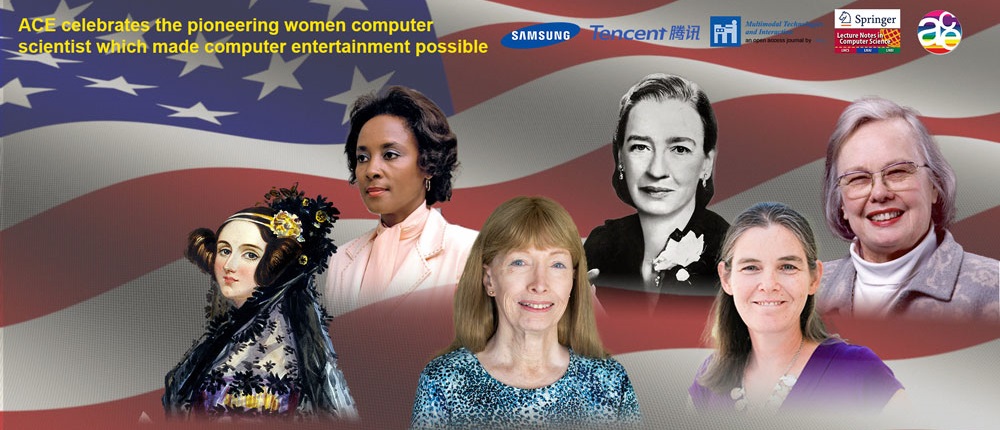
Interactive Entertainment is one of the fastest growing industries in the world. In 1996, the U.S. entertainment software industry reported $2.6 billion in sales revenue; this figure has more than tripled in 2007, yielding $9.5 billion in revenues. In addition, gamers, the target market for interactive entertainment products, are now reaching beyond the traditional 8-34 old male target demographic to include women, Hispanics, and African Americans. This pattern has been observed in several markets, including Japan, China, Korea, and India. Thus, interactive entertainment is becoming part of our everyday life, impacting our thinking, society and culture in many ways. ACE has become the leading academic forum for dissemination of novel research results in the area of entertainment computing. This year for the first time it incorporates DIMEA which has established itself over the last three years as a strong conference on interactive entertainment arts. Together the conference forms an exciting new step blending deeply the latest research in art and technology.

The focus of ACE 2009 is to gather researchers from academia and industry−researchers who are working in multi-disciplinary areas within the arts, psychology, computer science, and design to discuss, present, and demonstrate their new contributions. The goal of ACE is to stimulate discussion in the development and advancement of interactive art and entertainment applications. It, thus, strides to balance several interdisciplinary areas and seeks representation in all these areas, including, but not limited to:

  • Accessibility
  • Aesthetics
  • Affective Computing
  • Ambient Intelligence
  • Animation Techniques
  • Attention
  • Augmented / Mixed Reality
  • Avatars and Virtual Community
  • Community
  • Cultural Computing
  • Digital Entertainment and Sports
  • Digital Broadcasting/Podcasting
  • Digital Cinema
  • Elderly Entertainment
  • Empathy
  • Entertainment Design Theory
  • Experience Design
  • Funology
  • Graphics Techniques
  • Human-Robots Interaction
  • Interaction Design
  • Interactive Computer Graphics
  • Interactive Theatre
  • Internet Networking Media
  • Learning and Children
  • Location-Based Entertainment
  • Metaverse
  • Mixed Media
  • Mobile Entertainment
  • Multimodal Interaction
  • Narratives / Digital Storytelling
  • New Gaming Audiences
  • Novel interfaces
  • Pervasive and Online Games
  • Physical Computing
  • Robotic Love and Affection
  • Simplicity
  • Situativity
  • Smart Gadgets and Toys
  • Social Impact
  • Social Networking
  • Sound and Music
  • Synesthetic Entertainment
  • Tangible Interfaces
  • User Interfaces
  • Visual Effects
  • Virtual Reality

To encourage presentation of such multi-disciplinary work, we invite submissions that fall into the following tracks:

Papers Track:

o Full Papers: Original unpublished technical, design, and theory/social impact. Submissions to this track
should not exceed 8 pages in ACM format.

o Short Papers: Original unpublished technical, design, and theory/social impact. Submissions to this
track should not exceed 4 pages in ACM format. The program committee may also
suggest submitted long papers be resubmitted as short papers.

o Posters: Breakthroughs in technical research, content design, industry applications, and entertainment
theories/social impact researches are invited. Submissions to this track should not exceed 2 pages in
ACM format. Format instructions are posted on the website noted below. All accepted submissions
will be published in conference proceedings.

Creative Showcases (show cased within three types of spaces: exhibition space, art gallery and gaming exhibit)

o Technical demos : prototype demos of advanced entertainment technology

o Games, including, but not limited to, experimental games, independent games, games for change,
video games, commercial games, casual games, mobile games

o Interactive narrative, interactive drama, alternate reality games, and interactive fiction

o interactive art installations

o web-based computer entertainment

o digital audio, visual and other sensory art

o Design showcase

One page abstracts of all accepted submissions will be published in conference proceedings.

For further information please visit: http://www.ace2009.org

Important Dates:
Deadline for Full and Short Papers: June 19, 2009
Deadline for Posters and Creative Showcases: June 19, 2009
Notifications of Acceptance: August 21, 2009
Camera Ready Copy: September 18, 2009

Submissions of papers will be online on our conference website (http://www.ace2009.org) using Easy Chair and should follow the ACM Submission Format. See ACM SIG Proceedings Template for more instructions.

Selected papers will be asked to extend their papers for a Journal Publication:
Selected papers will be published in Special Issue of ACM Computers in Entertainment and International Journal on Arts and Technology (IJART)
Awards
Best papers and creative showcases will be selected based on a jury of well respected pioneers in the field attending the conference. We honor the authors of these publications by presenting awards including:

Paper award categories: Gold, Silver, and Bronze.

Creative showcase award categories: Gold, Silver, and Bronze.

Organization Committee

Honorary General Chair
Ryohei Nakatsu
General Co-Chairs
Hirokazu Kato
Michael Haller
Athanasios V. Vasilakos
Program Co-chairs
Bruce Thomas
Yoshifumi Kitamura
Magy Seif El-Nasr
(Local) Organizing Co-chairs
John N. Karigiannis
Konstantinos Giannakis
Adrian David Cheok
Financial Co-Chairs
Ivan Boo

WWW Administrator

Miyuru Dayarathna
Demo Co-Chair
Maki Sugimoto
Art Exhibition Chair
Philippe Pasquier
Publicity Chair
Owen Noel Newton Fernando

Synthetic Reality conference in Israel

Adrian David Cheok delivered keynote address at the Synthetic Reality conference in Israel
Synthetic Reality was a symposium that combines keynote addresses, presentations of research papers, poster sessions, technical demonstrations, an industrial track, and tutorials. The event provided an opportunity for researchers from multiple disciplines to discuss the science and applications of synthetic realities. The seminar featured a packed program of lectures, invited talks, and demos.
Adrian David Cheok, the director of the Mixed Reality Lab at the National University of Singapore delivered the keynote address. In his talk, Adrian Cheok described his work introducing touch to VR applications. (Most virtual reality apps are based only on audio and video.) Some of these somewhat controversial applications enable users to pet animals from afar and even experience such physical interactions as hugging or even kissing remotely

Organizers: The Advanced Virtuality Lab (AVL), Sammy Ofer School of
Communications, IDC, in cooperation with the IBM Haifa Research Lab.

LINKS: https://www.research.ibm.com/haifa/info/201001_SR.shtml

Prof Pan Talk

Professor Pan, Zhejiang University, delivered a presentation about “Virtual Presentation of Product based on VR” on 8 Dec 2006 in NUS.

The talk discussed the state of the art on virtual presentation based on VR, which includes image-based method, and 3D-based presentation. The key technology is exploited, and some examples are discussed, including Virtual Shopping Mall, Virtual Presentation of Textile product (Easy Show), Virtual presentation of mobile phones, and application of the techniques to culture, entertainment park, sight-seeing and historical places.

Image

Image

Image

Image

Image

Image

Image

Image

Prof. Masahiko Inami Talk

Professor Masahiko Inami delivered a remarkable presentation on “Multi-Modal Interfaces to enhance Human I/O”, grabbing full attention from the viewers on the 1st March 2007. Several videos were shown to allow the viewers to have a better understanding. There are three main points that Professor Inami brought up in his presentation; Objects for Enhancement, Sensation Enhancement and Communication Enhancement.

Professor Masahiko Inami is a Professor in the Department Engineering and Intelligent Systems of the University of Electro-Communications, Tokyo. He was the Winner of Time Magazine for the “Coolest Inventions”.
Before that, on the 28th February, `Professor Inami and his students, Noriyoshi Shimizu went to the Singapore Science Centre to set up the Teddy Bear Robots.

http://www.twango.com/channel/mxrlab.inami

Prof. Ryohei Nakatsu Talk

Prof Nakatsu gave a public lecture on “Digital & Interactive Media and Their Future”, which was held at the Engineering Auditorium in National University of Singapore on the 25 Oct 2007. The day before the talk, he came to visit MXR lab to understand in depth on the research that our lab is working.

Images:
http://www.twango.com/channel/mxrlab.ryoheinakatsu

Video:
http://nuscast.nus.edu.sg/PublicEvents/1/MODVideoOnly.asp?KEY=93FA77F0-3523-43A3-BA30-619C909164BE

Singapore President Visit

Image

The Keio-NUS CUTE Center was officially opened by His Excellency President SR Nathan on 12th October, 2009. The event was attended by distinguished invitees from the National Research Foundation (NRF), the Media Development Authority (MDA), the National University of Singapore (NUS), the Keio University and several other government and private sector organizations.

HE President declared open the center by cutting the traditional ribbon as well as launching a “digital ribbon cutting” followed by the unveiling of the plaque. The Co-Director of the Center, Prof. Adrian Cheok, showed visitors the cutting edge research carried out in the Center. Introducing its research, Prof. Cheok stated that “our research tries to solve important problems in society”. The demos included research carried out in the Center using different media for communicating between Children and Families using senses hitherto unexplored in such communication. Some of the demos that caught the attention of the distinguished gathering included AmbiKraf-color changing fabrics, Petimo-Safe social networking tool for children and Huggy Pajama – a remote hugging device for families. The visitors were highly appreciative of the achievements of the Center in a very short period of its existence and congratulated the Center director and its staff in progress made in making Singapore a global hub in Interactive and Digital Media research. Several guests congratulated the Center Co-Directors Prof. Cheok and Prof. Masa Inakage of Keio University on the initiative taken to share the resources and expertise of two highly acclaimed academic institutes in coming together for collaborative research. Research staff and students of the center were highly thrilled to demonstrate their research and the global award-winning results obtained to such a distinguished gathering and are highly motivated by the interest shown by such a distinguished group of visitors.

ADRIAN DAVID CHEOK AS A 2008 YOUNG GLOBAL LEADER

Image

ADRIAN DAVID CHEOK joins 245 leading executives, public figures and intellectuals – all age 40 or younger – chosen from around the world

Geneva, Switzerland, 11 March 2008 – The World Economic Forum today announced Adrian David Cheok has been selected as a Young Global Leader 2008. This honor is bestowed each year by the World Economic Forum to recognize and acknowledge the top 200-300 young leaders from around the world for the professional accomplishments, commitment to society and potential to contribute to shaping the future of the world.

The Young Global Leaders for 2008 include 121 business leaders, as well as leaders from government, academia, media and society at large from 65 countries. The new class represents all regions, including East Asia (64), Europe (58), Middle East and North Africa (12), North America (45), South Asia (24), sub-Saharan Africa (21) and Latin America (21).

“The World Economic Forum is a true multi-stakeholder community of global decision-makers. We need the Young Global Leaders to be a voice for the future in the global thought process and as a catalyst for initiatives in the global public interest.” Said Klaus Schwab, Founder and Executive Chairman of the World Economic Forum.

Drawn from a pool of almost 5,000 candidates, the Young Global Leaders 2008 were chosen by a selection committee of 31 eminent international media leaders, including Thomas H. Glocer, Chief Executive Officer, Reuters, United Kingdom; Arthur Sulzberg, Chairman and Publisher, The New York Times, USA; Robert Thomson, Publisher, Dow Jones & Company and The Wall Street Journal, USA; and Hisashi Hieda, Chairman and Chief Executive Officer, Fuji Television Network, Japan. The selection committee is chaired by H.M. Queen Rania Al Abdullah of the Hashemite Kingdom of Jordan.
The current community of Young Global Leaders represents over 60 countries and includes Larry Page and Sergey Brin, Co-Founders of Google, USA; Crown Prince Haakon of Norway; Malvinder M. Singh, Chief Executive Officer and Managing Director, Ranbaxy Laboratories, India; Hiroshi Nakada, Mayor of Yokohama, Japan; Nicky Newton-King, Deputy Chief Executive Officer, JSE, South Africa; Carlos Danel, Co-Chief Executive Officer, Banco Compartamos, Mexico; and Jack Ma Yun, Chairman and Chief Executive Officer, Alibaba Group, People’s Republic of China.

“It is our belief that this community of committed individuals can actually change the status quo. They are not only a preview of what effective, collaborative leadership in the 21st century might look like, they are actually putting it into practice today,” said David Aikman, Senior Director and Head of the Forum of Young Global Leaders. “It is our privilege to work with such inspirational leaders and to bring them together in a global network that builds their insights and skills even further, providing them with a global platform to tackle the key challenges of our generation.

Established in 2004 by Professor Klaus Schwab, The Forum of Young Global Leaders is a unique, multistakeholder to community of the world’s most extraordinary young leaders, who dedicate a part of their time to jointly address global challenges and who are committed to devote some of their knowledge and energy to collectively work towards a better future. As part of their engagement, the Young Global Leaders give their time to task forces to initiate, develop and drive innovative solutions on important, globally-oriented issues, including health, education, the environment, global governance and security, and development and poverty.

For more information and a detailed list of all Young Global Leaders, visit www.younggloballeaders.org,http://www.weforum.org/en/index.htm

C4C – Como for Children Design Competion

The Chamber of Commerce of Como, in occasion of the IDC 2009 conference, has promoted a special competition calling for proposals on a “technology-enhanced” pre-school environment: the Como 4 Children (C4C) competition. C4C is an initiative to promote a strong innovation of the approach to education for young children (3-10 years of age). The competition’s goal is to “imagine a pre-school of the (near or remote) future, where the physical space is enhanced with (existing or future) technologies and children can naturally intermix, at individual or social level, ‘traditional’ playing and learning activities with interaction based on modern technologies of all kinds”. The competition has two tracks: Vision of the interactive pre-school of the future and Interaction at pre-school. 35 creative, visionary and compelling proposal were submitted from all over the world, by designers, interaction designers, computer scientists and architects. The conference chairs together with a panel of experts from the Chamber of Commerce of Como, after a careful analysis have selected the best 3 proposals for each track. The top 3 winners for Track 1 are from Stanford University, USA, a collaborative proposal between Georgia Institute of Technology, USA and Eindhoven University of Technology, The Netherlands, and another proposal from ASP-Politecnico Milano, Turkey. Petimo was named as a winner in Track 2. Besides Petimo, the other 2 selected top 3 winners are proposals from MIT Media Lab, USA and University of Iowa, USA. We gave a presentation about Petimo in a special session during the IDC 2009 conference. After the presentation, we receive many positive feedback about the project. One of the Italian speaking panelist gave his thumbs-up immediately upon the completion of our presentation. The distinguished panelists were very impressed at the high quality of the project, its vision and implementation within a short time frame.

Huggy Pajama filming for new NHK program, Gatchan

Image Image

NHK (Japan Broadcasting Corporation, http://www.nhk.or.jp/nhkworld/) recently conducted a filming of the Huggy Pajama project for a new program called Gatchan. This TV program is an educational program to introduce some of the famous universities in the world, and especially research works conducted by unique research labs in these universities.

Photo Link : http://share.ovi.com/album/mxrlab.HuggyPajamafilm

After some research, NHK found that the works in Mixed Reality Lab are very interesting and suitable for the TV program. Ms Hiroko Kikuchi, the Singapore media coordinator for NHK contacted Professor Adrian Cheok, director of Mixed Reality Lab, and voiced the interest on highlighting the works done in the lab, drawing particular attention to Huggy Pajama. Initially, NHK representatives visited Keio University, where the NUS-KEIO CUTE Center’s lab is located. We showed a demonstration of the earlier prototype of Huggy Pajama and other lab works like Petimo and Kiss Robot.

To read more : http://www.mixedrealitylab.org/media/articles/NHKTV-newsArticle.doc

The Young Investigator’s Forum on Culture Technology

Image

The Young Investigator’s Forum on Culture Technology (YoungCT) is an annual event bringing together leading young scholars, industry executives and great mentors of our time. ‘Culture Technology’ covers a wide range of research areas on digital media and related technologies, which are gaining ever-increasing significance in every corner of our surroundings and culture. As a unique workshop that invites advanced graduate students (or those with equivalent credentials) around the world, the forum aims to facilitate discussion on Culture Technology among young researchers. Furthermore, YoungCT will provide you an opportunity to visit Korea and to celebrate diverse cultures. This time the theme for the event was “Engaging Culture and Technology”. The mixed reality lab PhD scholars Nimesha Ranasinghe and Eng tat Khoo presented their research works “Poetry Mash-up” and “Confucius Computer” respectively in young CT 2009.

More information: http://ct.kaist.ac.kr/yct2009/

Photo Link : http://share.ovi.com/album/mxrlab.TheYoungInvesti

Nimesha ‘s Report : http://www.mixedrealitylab.org/media/articles/YouthCT2009 Report NimeshaRanasing.pdf

Eng Tat ‘s Report: http://www.mixedrealitylab.org/media/articles/ET YCT09 report.pdf

AmbiKraf at Digital Content Expo 2009 and Interactive Tokyo Symposium

Image

Image

AmbiKraf was demonstrated at the recent Digital Content Expo 2009 in Tokyo Japan. The event was held at the National Museum of Emerging Science and Innovation (Miraikan). The exhibition was held as a part of the Content Technology Exhibits (ConTEX) 2009 through 22nd to 25th October 2009. The project received great comments and complements from the public. The attendees were fascinated by the animated form of the fabric and the technology utilized. Many industrial players including Samsung Mobile were interested in the technology for use in their future products.

In addition, AmbiKraf was presented at the Interactive Tokyo Symposium in the “Real World” session. The panel discussion following the presentation discussed about the future applications and research directions of such technologies.